Loose-Leash Walking for Large Breed Puppies
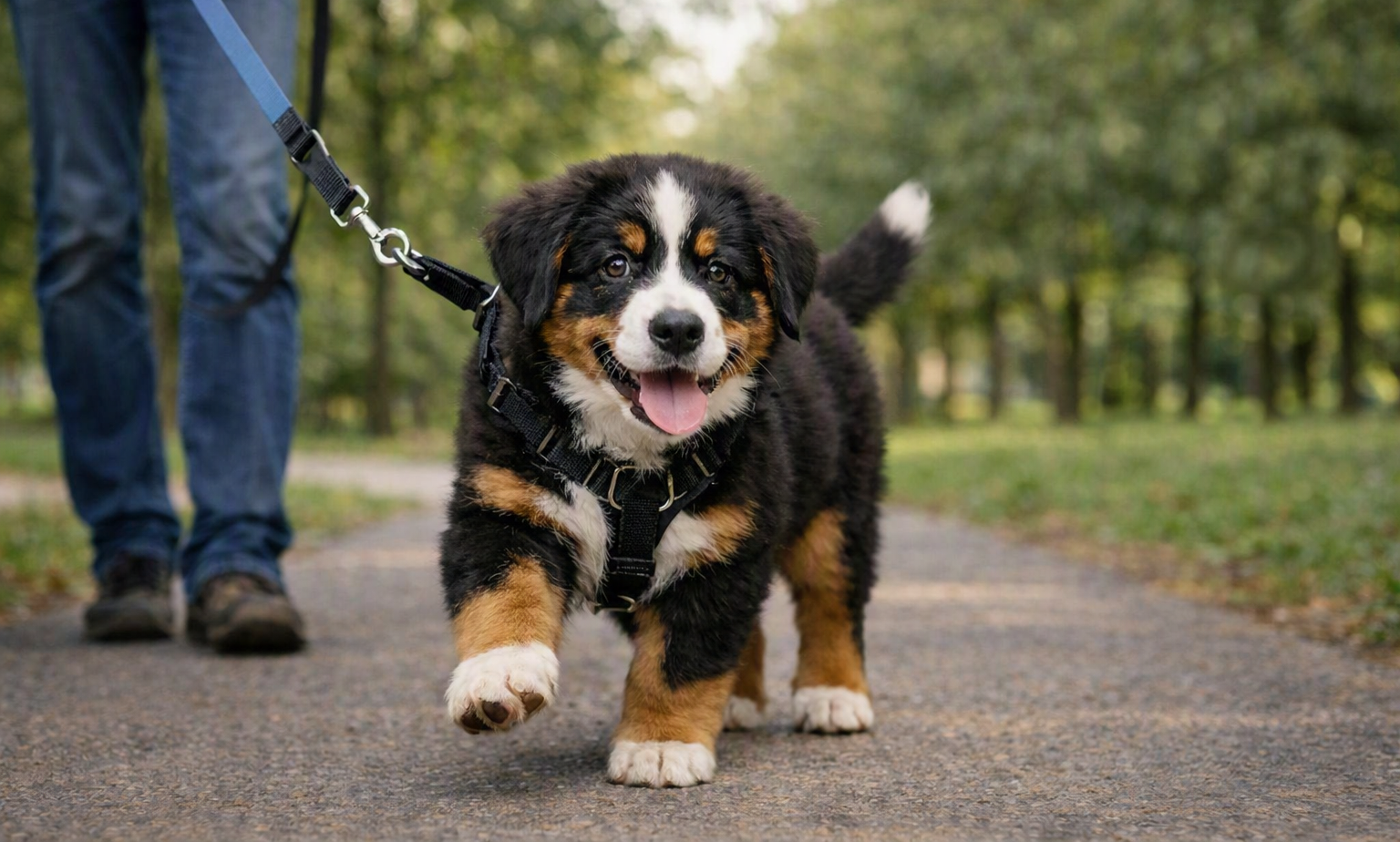
Few things are more enjoyable than taking your puppy for a walk until they discover they can pull you down the sidewalk.
For large breed puppies, leash manners aren’t just about convenience. A 25-pound puppy can quickly become a 100-pound adult capable of overpowering even experienced owners if pulling becomes a habit.
Loose-leash walking is much easier to teach before your puppy becomes stronger and more confident.
Here’s how to build excellent leash manners from the very beginning.
Why Large Breed Puppies Should Learn Early
Large breeds grow incredibly fast.
Between 4 and 12 months, many puppies gain dozens of pounds while also becoming more energetic and curious.
Teaching loose-leash walking early helps:
- Prevent pulling from becoming a lifelong habit
- Reduce stress on developing joints
- Make walks enjoyable for everyone
- Improve focus around distractions
- Increase safety near roads and other dogs
Starting early is much easier than correcting years of pulling later.
Why Puppies Pull on the Leash
Contrary to popular belief, puppies aren’t trying to dominate you.
They’re simply excited.
Common reasons include:
- Everything smells interesting.
- They naturally walk faster than people.
- They’re curious about other dogs.
- They want to investigate every sound and movement.
- Pulling has accidentally been rewarded by allowing them to reach what they want.
Fortunately, these are all behaviors you can train through.
Choose the Right Equipment
Good equipment makes learning easier—but it doesn’t replace training.
A Well-Fitting Harness
A properly fitted harness provides better control while reducing pressure on your puppy’s neck.
Look for:
- Front and back leash attachment points
- Adjustable straps
- Padded chest panels
- Durable materials
- Secure buckles
Front-clip harnesses are especially helpful because they gently redirect your puppy toward you when they pull.
Standard Leash
A 6-foot leash gives enough freedom while maintaining control.
Avoid retractable leashes during training because they teach puppies that constant tension is normal.
Treat Pouch
Keeping rewards immediately accessible dramatically improves training success.
Soft, pea-sized treats work best.
Reward the Behavior You Want
Loose-leash walking isn’t about correcting mistakes.
It’s about rewarding success.
Every time your puppy walks beside you with slack in the leash:
- Mark the behavior
- Immediately reward
- Continue walking
Your puppy quickly learns that walking beside you makes good things happen.
Start Inside First
Many owners make the mistake of practicing outside immediately, which is full of distractions.
Instead:
Step 1
Practice inside your home.
Reward your puppy every few steps.
Step 2
Move to your backyard.
Continue rewarding frequently.
Step 3
Practice on quiet sidewalks.
Gradually increase distractions over several weeks.
Success builds confidence.
What to do when your puppy pulls
Every puppy pulls sometimes.
When it happens:
Stop Walking
Become completely still.
Don’t yank the leash or drag your puppy backward.
Just stop moving.
Wait
Eventually your puppy will:
- Look back
- Step toward you
- Create slack in the leash
Immediately reward and continue walking.
This teaches your puppy that pulling stops the walk. Loose leash makes the walk continue.
Use High-Value Rewards Outside
The outside world is exciting; noises, squirrels, other pets. Regular treats may not compete with the distractions of the outside world.
Use treats your puppy truly loves:
- Small chicken or turkey pieces
- Cheese (sparingly)
- Commercial puppy training treats
As your puppy improves, gradually reduce treat frequency while continuing praise.
A Simple Weekly Training Schedule
Here is an example of a weekly training schedule for your puppy. It can be adjusted for your personal needs. Make sure to keep the training short. Puppies have short attention spans, just like kids. Consistency matters more than long sessions.
| Day | Goal | Time |
|---|---|---|
| Monday | Indoor practice | 5 minutes |
| Tuesday | Backyard walking | 5–10 minutes |
| Wednesday | Quiet sidewalk | 10 minutes |
| Thursday | Indoor review | 5 minutes |
| Friday | Neighborhood walk | 10–15 minutes |
| Saturday | Park with mild distractions | 15 minutes |
| Sunday | Fun review session | 10 minutes |
Short daily practice is far more effective than one long weekly session.
Common Loose Leash Walking Mistakes
1. Waiting Until the Dog Is Huge
Many owners delay leash training because their puppy is “still little.” Unfortunately, large puppies don’t stay little for long.
Start immediately.
2. Inconsistent Rules
If pulling works sometimes, your puppy learns to keep trying.
Be consistent every walk.
3. Walking Too Far
Young puppies become tired and overstimulated.
Keep walks short.
4. Expecting Perfection
Puppies are learning and some walks will be good and others won’t.
That’s completely normal.
5. Using Equipment as a Shortcut
No harness will completely eliminate pulling. Training, not equipment is what creates lasting results.
Equipment simply makes learning easier.
Patience is the Key
Many owners notice their puppy suddenly “forgets” everything around 6–12 months.
This is normal behavior. Adolescent dogs become:
- More independent
- Easily distracted
- More confident
Continue rewarding good choices and stay consistent. Most puppies improve again with regular practice.
Signs your Puppy is Improving
You know you are moving in the right direction when your puppy:
- Keeps the leash loose more often
- Recovers quickly after distractions
- Pulls less frequently
- Looks to you for guidance
Progress happens gradually.
Final Thoughts
Loose-leash walking is one of the most valuable skills your large breed puppy can learn. By starting early, using positive reinforcement, and practicing consistently, you’ll create enjoyable walks that last a lifetime.
Remember that every calm step beside you is worth rewarding. With patience and repetition, your energetic puppy can grow into a polite adult dog that walks comfortably without constant pulling.
Trusted Resources
- American Kennel Club. (n.d.). How to train your dog to walk on a loose leash.
- American Veterinary Medical Association. (n.d.). Positive reinforcement training for dogs.
- American Animal Hospital Association. (2020). Life stage guidelines for dogs and cats.
- Overall, K. L. (2013). Manual of Clinical Behavioral Medicine for Dogs and Cats. Elsevier.
- Yin, S. (2009). Low Stress Handling, Restraint and Behavior Modification of Dogs & Cats. CattleDog Publishing.