American Bully vs. Pit Bull: Which Needs More Exercise?
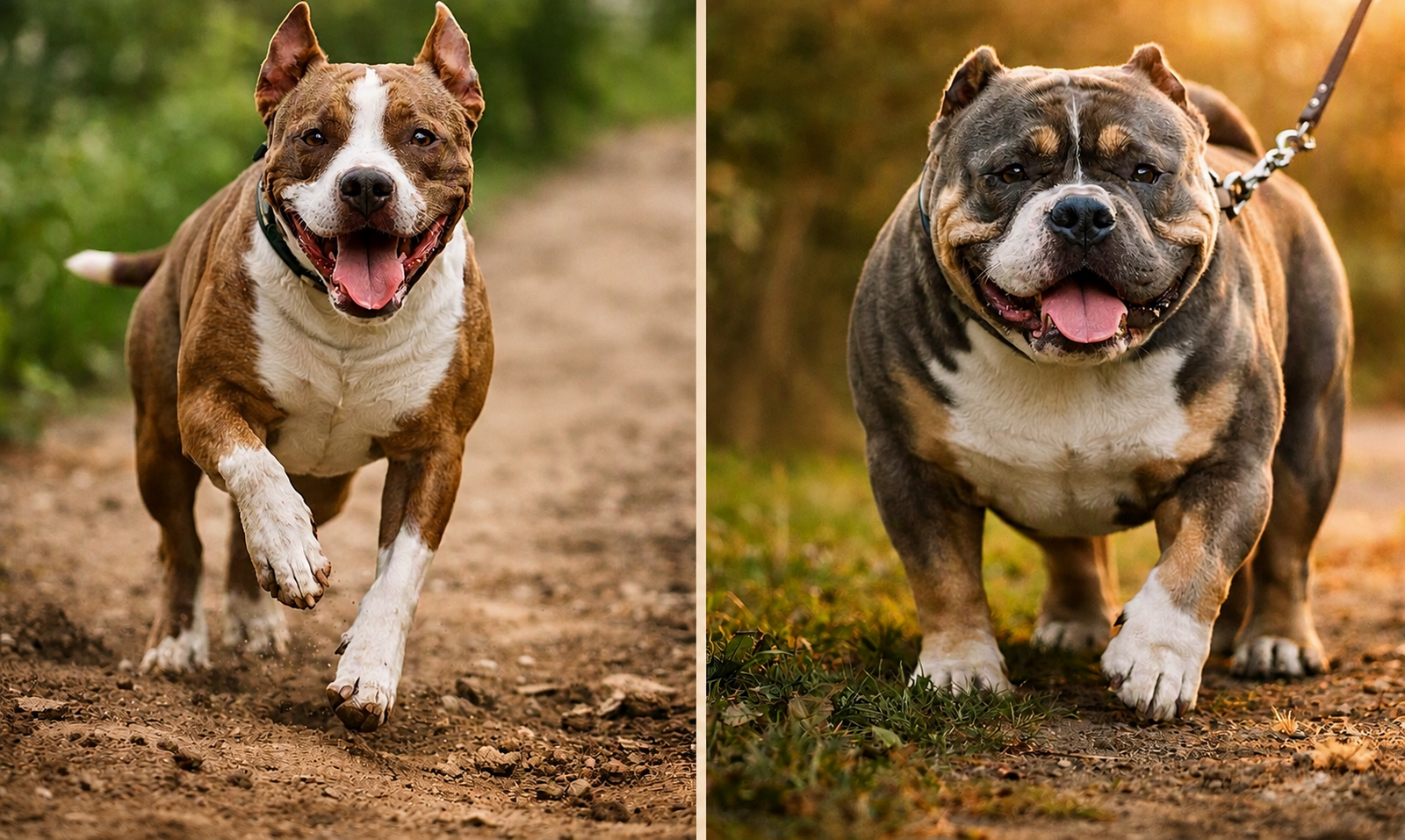
If you’re comparing an American Bully and an American Pit Bull Terrier or Pit Bull, you might wonder which dog needs more exercise.
Both can be strong, athletic, energetic dogs, but they aren’t necessarily built the same way. An American Pit Bull Terrier is generally a more agile, athletic type of dog, while the American Bully was developed primarily as a companion breed and has a stockier, heavier build.
That doesn’t mean an American Bully wants to spend all day on the couch. These dogs still enjoy walks, playtime, training, and plenty of interaction with their people.
The biggest difference is that the type and intensity of exercise that works well for one dog may not be ideal for another.
American Bully Exercise Needs
American Bullies are muscular, strong, and surprisingly active dogs.
The UKC describes the breed as active and agile, despite its compact and thick-set appearance. The breed standard also emphasizes that excessive characteristics shouldn’t interfere with physical activity or normal movement.
American Bullies come in different sizes and body types, including Pocket, Standard/Classic, and XL.
That variety matters when you’re thinking about exercise. A smaller, athletic American Bully may happily spend a good amount of time walking and playing. A heavier XL Bully may have very different physical abilities.
Good Exercise Options for an American Bully
Many American Bullies enjoy activities such as:
- Daily walks
- Playing fetch
- Short games of tug
- Exploring new places
- Training sessions
- Food puzzles
- Nose work
- Swimming, if your dog enjoys it and is a safe swimmer
- Controlled play with appropriate dogs
You don’t necessarily need to turn every walk into a workout.
A walk where your dog gets to sniff, explore, and take in the surroundings can provide both physical activity and mental stimulation. Sniffing and exploratory walks can be pleasurable for dogs.
American Bullies May Prefer Shorter Bursts of Activity
Because of their stockier build, some American Bullies may do better with moderate activity broken into shorter sessions rather than long periods of intense exercise.
The American Bully breed standard specifically warns against exaggerated physical characteristics that interfere with normal movement or activity. A very muscular dog does not mean they automatically have more endurance.
Pit Bull Exercise Needs
When we’re talking specifically about the American Pit Bull Terrier, we’re talking about a dog with a history of athleticism and physical activity.
The UKC describes the American Pit Bull Terrier as a muscular, very agile, physically active breed.
The American Kennel Club also describes the closely related American Staffordshire Terrier as athletic and well suited to activities such as obedience, agility, tracking, and other dog sports.
Good Exercise Options for a Pit Bull
An active Pit Bull may enjoy:
- Brisk walks
- Hiking
- Fetch
- Tug
- Running, once appropriately conditioned
- Agility
- Obedience training
- Interactive games
- Swimming
- Flirt-pole activities
- Other structured dog sports
Which One Needs More Exercise?
If you’re comparing a typical, athletic American Pit Bull Terrier with a stockier American Bully, the Pit Bull may be better suited to sustained, athletic activities.
But that doesn’t mean every Pit Bull needs more exercise than every American Bully. Individual dogs can be very different. A young, energetic American Bully may need considerably more activity than an older or less active Pit Bull.
Age, body condition, health, temperament, and fitness level all affect how much exercise a dog can comfortably handle. Veterinary sources recommend tailoring exercise to the individual dog rather than relying solely on breed.
A Simple Comparison Of Each Dog
| American Bully | American Pit Bull Terrier | |
|---|---|---|
| Overall build | Stocky and muscular | Muscular and athletic |
| Activity level | Moderate to active | Often active |
| Agility | Can be agile, depending on build | Generally very agile |
| Long-distance activity | Depends heavily on individual build | May be better suited to sustained activity |
| Walking | Excellent choice | Excellent choice |
| Play | Enjoys interactive play | Often enjoys active play |
| Mental stimulation | Important | Important |
| Dog sports | Some may enjoy them | Often well suited to them |
| Best approach | Adjust activity to build and fitness | Gradually build fitness and endurance |
The table is a general comparison, not a rule.
How Much Exercise Does a Pit Bull or American Bully Need?
There’s no magic number that applies to every dog.
You may see general recommendations suggesting anywhere from around 30 minutes to two hours of daily activity, but those numbers are broad guidelines rather than a prescription for every dog. Exercise needs depend on factors such as age, breed, size, health, and fitness.
Instead of asking, “How many minutes does my dog need?” it can be more useful to ask:
What type of activity does my dog enjoy, and how does my dog respond to it?
For example, your dog’s daily activity might include:
- A morning walk
- A short training session
- Some playtime in the afternoon
- An evening walk
- A food puzzle or scent game
That can be more useful than trying to fit everything into one long workout.
Puppies Need a Different Approach
Don’t assume that a young Pit Bull or American Bully should immediately start doing long runs or strenuous exercise. Puppies are still growing, and their developing bones and joints need time to mature.
Veterinary guidance recommends avoiding excessive or repetitive high-impact activity in growing puppies. VCA, for example, recommends short bursts of play for puppies and cautions against routinely jogging or running with larger puppies before they are fully grown.
Your veterinarian can help determine when your individual dog is ready for more demanding activities.
Mental Exercise: Both Breeds Need It
Exercise isn’t only about running around.
Both American Bullies and Pit Bulls can benefit from activities that make them think.
Try adding:
- Basic obedience training
- Puzzle feeders
- Sniffing games
- Hide-and-seek
- Finding hidden treats
- Learning new tricks
- Interactive toys
- Controlled games of fetch
A 10-minute training session can give your dog something to focus on while strengthening the bond between you. This can be particularly helpful on days when the weather isn’t cooperating and a long outdoor walk isn’t practical.
Watch for Signs That Your Dog Has Had Enough
More exercise isn’t always better. Dogs can overdo it, particularly when they’re excited and don’t want to stop playing.
Keep an eye out for signs of fatigue such as:
- Excessive or unusual panting
- Repeatedly trying to sit or lie down
- Slowing down significantly
- Difficulty getting up afterward
- Changes in posture
- Reluctance to continue
- Acting unusually tired after exercise
VCA recommends stopping exercise when a dog appears out of breath or repeatedly tries to sit or lie down.
If your dog seems sore, unusually tired, or has trouble moving after exercise, give them a break and talk with your veterinarian if the problem continues.
Don't Forget the Weather
Pit Bulls and American Bullies can both be eager to keep going when they’re having fun. That doesn’t mean they should.
Hot weather can make exercise considerably more challenging. Plan outdoor activities for cooler parts of the day, provide access to water, and don’t push your dog simply because they still want to play.
This is especially important for American Bullies with very short muzzles or exaggerated physical features that may affect their ability to exercise comfortably. The UKC breed standard specifically identifies excessively short muzzles and other exaggerated characteristics that interfere with normal function as serious concerns.
Conclusion
Don’t choose an American Bully or Pit Bull based solely on which one you think will need more exercise. Instead, think about the lifestyle you can realistically provide.
If you enjoy hiking, running, training, and active outdoor adventures, an athletic Pit Bull may be a great match.
If you prefer walks, playtime, training, and a dog that can enjoy activity without needing to be your marathon partner, an American Bully may fit your lifestyle well.
Either way, the goal isn’t to completely exhaust your dog every day. The goal is to give your dog the right combination of physical activity, mental stimulation, rest, and time with you.
Trusted Resources
- American Kennel Club. (n.d.). 10 active dog breeds that will help you stay fit. American Kennel Club
- American Animal Hospital Association. (2019). 2019 AAHA canine life stage guidelines. AAHA Canine Life Stage Guidelines
- United Kennel Club. (2025). American Bully: Official UKC breed standard. United Kennel Club – American Bully
- United Kennel Club. (n.d.). American Pit Bull Terrier: Official UKC breed standard. United Kennel Club – American Pit Bull Terrier
- VCA Animal Hospitals. (2025). Healthy exercise for dogs. VCA Animal Hospitals
- VCA Animal Hospitals. (n.d.). Dog behavior and training – Play and exercise. VCA Animal Hospitals
- PetMD. (2019). Exercising with your dog 101. PetMD