Front-Clip vs. Back-Clip Harnesses: Which Works Best?
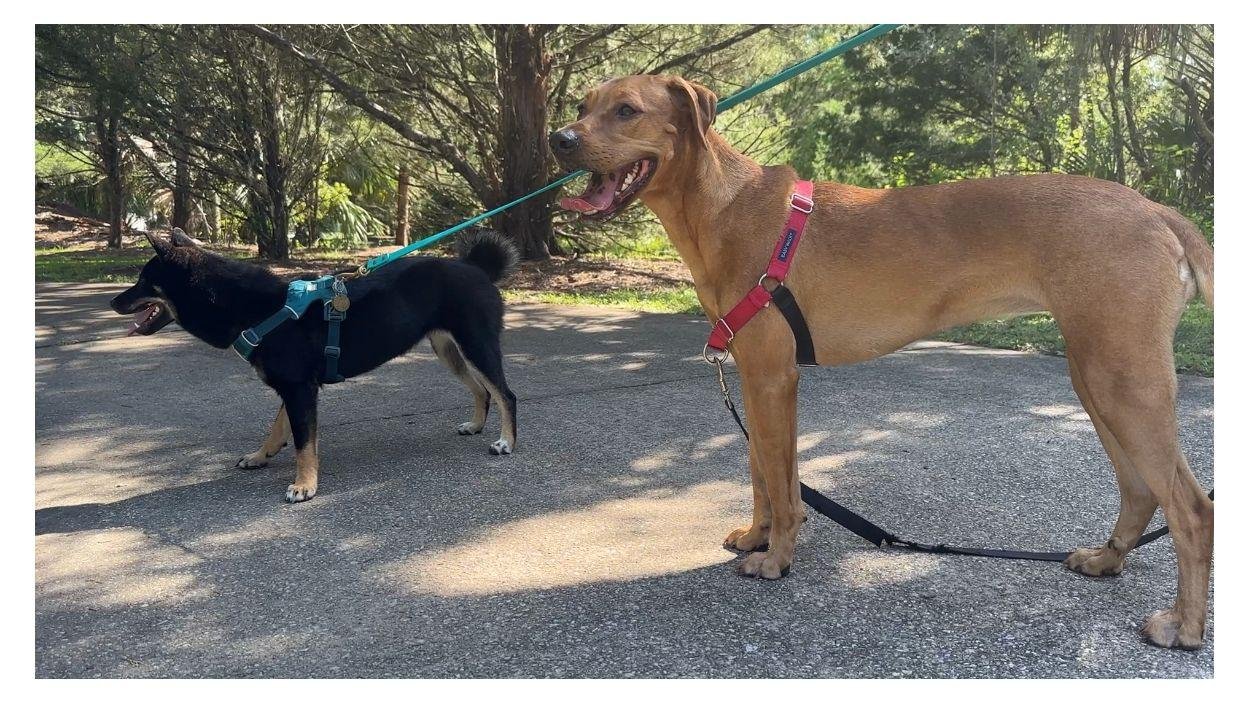
If you’re shopping for a harness for a large dog, you’ve probably noticed that some harnesses have the leash attachment on the front of the chest, while others have it on the back between the shoulder blades.
So which one is better? The answer isn’t quite that simple.
Front-clip and back-clip harnesses each have their advantages and disadvantages. A front-clip harness can give you more control when your dog pulls, while a back-clip harness is often simpler and more comfortable for dogs that already have good leash manners.
And then there are dual-clip harnesses, which give you both options.
Here the similarities and differences so you can decide which style makes the most sense for your large dog.
What Is a Front-Clip Harness?
A front-clip harness has the leash attachment point on the front of the dog’s chest.
When your dog moves forward and pulls against the leash, the front attachment changes the direction of that pressure. Instead of allowing the dog to continue moving straight ahead, it can help turn the dog back toward you.
This makes front-clip harnesses popular for dogs that pull and for owners working on loose-leash walking.
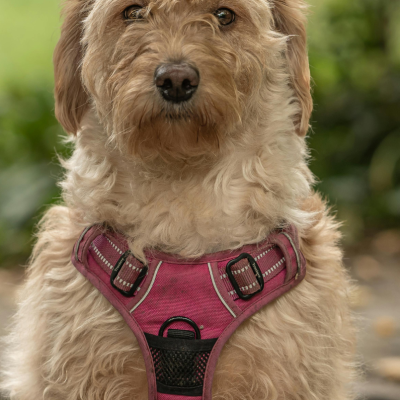
Pros of Front-Clip Harnesses
Better Control
One of the biggest advantages of a front-clip harness is control.
When a strong dog suddenly decides that the squirrel across the street is far more interesting than you are, having the leash attached at the chest can make it easier to redirect them. This can be most helpful with large, powerful dogs.
Can Help With Pulling
Front-clip harnesses are commonly used as a training tool for dogs that pull.
Rather than simply allowing the dog to lean into the leash and continue forward, the front attachment helps redirect their body. That’s one reason front-clip harnesses are often incorporated into loose-leash training. However, the harness isn’t teaching your dog to walk nicely by itself. You’ll still need to work on the actual behavior.
Useful During Training
A front-clip harness can give you an easier way to manage a large puppy or adult dog while you’re teaching leash manners.
Cons of Front-Clip Harnesses
Can Twist During Walks
Some dogs cause the harness to rotate around their body if it’s not fitted correctly. A snug, properly adjusted harness helps to minimize this issue.
Not Good for Running
Since the leash is attached at the chest, energetic activities like jogging or hiking can feel awkward.
Requires Proper Fit
An improperly fitted front-clip harness can rub behind the legs or limit shoulder movement.
Always measure your dog before purchasing.
What Is a Back-Clip Harness?
A back-clip harness places the leash attachment between the dog’s shoulders.
This is the traditional harness design and works well for dogs that already walk politely on a leash.
It offers excellent comfort and freedom of movement.
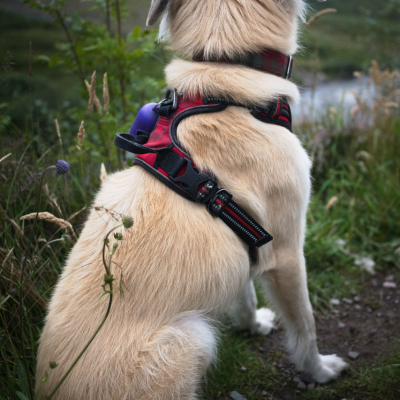
Pros of Back-Clip Harnesses
Very Comfortable
Back-clip harnesses generally allow natural shoulder movement and are comfortable for everyday walks.
Great for Calm Dogs
Dogs that already have good leash manners often do perfectly with a back attachment.
Easy to Put On
Many back-clip harnesses feature simple buckles and fewer adjustment points. They’re often easier for new owners to use.
Excellent for Hiking
Because the leash stays behind the dog, movement feels more natural during longer adventures.
Cons of Back-Clip Harnesses
Doesn’t Reduce Pulling
If your dog likes to pull, a back-clip harness can actually make pulling easier. Dogs naturally lean into pressure, much like sled dogs pulling a sled.
Less Steering Control
Owners have less ability to redirect their dog’s body when distractions appear.
Which Harness Is Better for Training?
The American Kennel Club indicates that front-clip harnesses can be helpful for dogs that tend to pull, while back-clip harnesses are often recommended for dogs that are already well trained on leash.
For most dogs learning leash manners, front-clip harnesses are the better choice. They help interrupt pulling by turning the dog’s body rather than allowing them to continue moving forward.
Always remember that a harness is only a training tool, not a training solution. Consistent practice and patience are still essential for teaching loose-leash walking. As your dog improves, many owners transition to a back-clip harness for everyday walks.
Which Harness Is More Comfortable?
Comfort depends more on fit and design than clip location.
Look for harnesses that include:
- Padded chest panels
- Adjustable straps
- Breathable materials
- Freedom of shoulder movement
- Secure buckles
A poorly fitted harness regardless of style can cause rubbing or restrict movement.
Which Harness Is Safer?
Both harness types are safer than attaching a leash directly to a collar for large dogs that pull. Harnesses help distribute pressure across the chest instead of concentrating it on the neck.
For maximum safety:
- Check the fit regularly.
- Replace worn harnesses.
- Ensure buckles latch securely.
- Never leave a harness on unsupervised dogs for extended periods.
- Attach identification tags to your dog’s collar rather than the harness, as harnesses may be removed.
Which Dogs Benefit Most from Each Style?
| Front-Clip Harness | Back-Clip Harness |
|---|---|
| Pulls on leash | Walks politely |
| Puppy training | Daily neighborhood walks |
| Reactive dogs | Hiking and outdoor adventures |
| Strong breeds | Senior dogs with good leash manners |
| Obedience training | Relaxed family walks |
Can You Use Both?
Yes, you can use both. Many owners use both types of harnesses.
For example:
- Front-clip harness: Training sessions, crowded parks, veterinary visits, busy sidewalks.
- Back-clip harness: Casual walks, hiking trails, relaxed outings.
Some harnesses include both front and back leash attachment points, giving you the flexibility to choose based on your situation.
Final Thoughts
Neither harness style is universally better. The best choice depends on your dog’s behavior and your training goals.
If your large dog pulls hard or is still learning leash manners, a front-clip harness usually offers better control and supports training. Once your dog becomes a reliable walker, a back-clip harness can provide excellent comfort for everyday adventures.
The most important factor isn’t the clip location, it’s choosing a well-fitted, durable harness and matching it with consistent training.
Trusted Resources
- American Animal Hospital Association. (2021). Selecting the right collar or harness for your dog. https://www.aaha.org
- American Kennel Club. (2024). How to choose the right dog harness. https://www.akc.org
- American Veterinary Medical Association. (2024). Dog walking safety. https://www.avma.org
- Overall, K. L. (2013). Manual of Clinical Behavioral Medicine for Dogs and Cats. Elsevier.
- Yin, S. (2009). Low Stress Handling, Restraint and Behavior Modification of Dogs & Cats. CattleDog Publishing.