Rope, Nylon, or Leather? Choosing the Best Leash Material
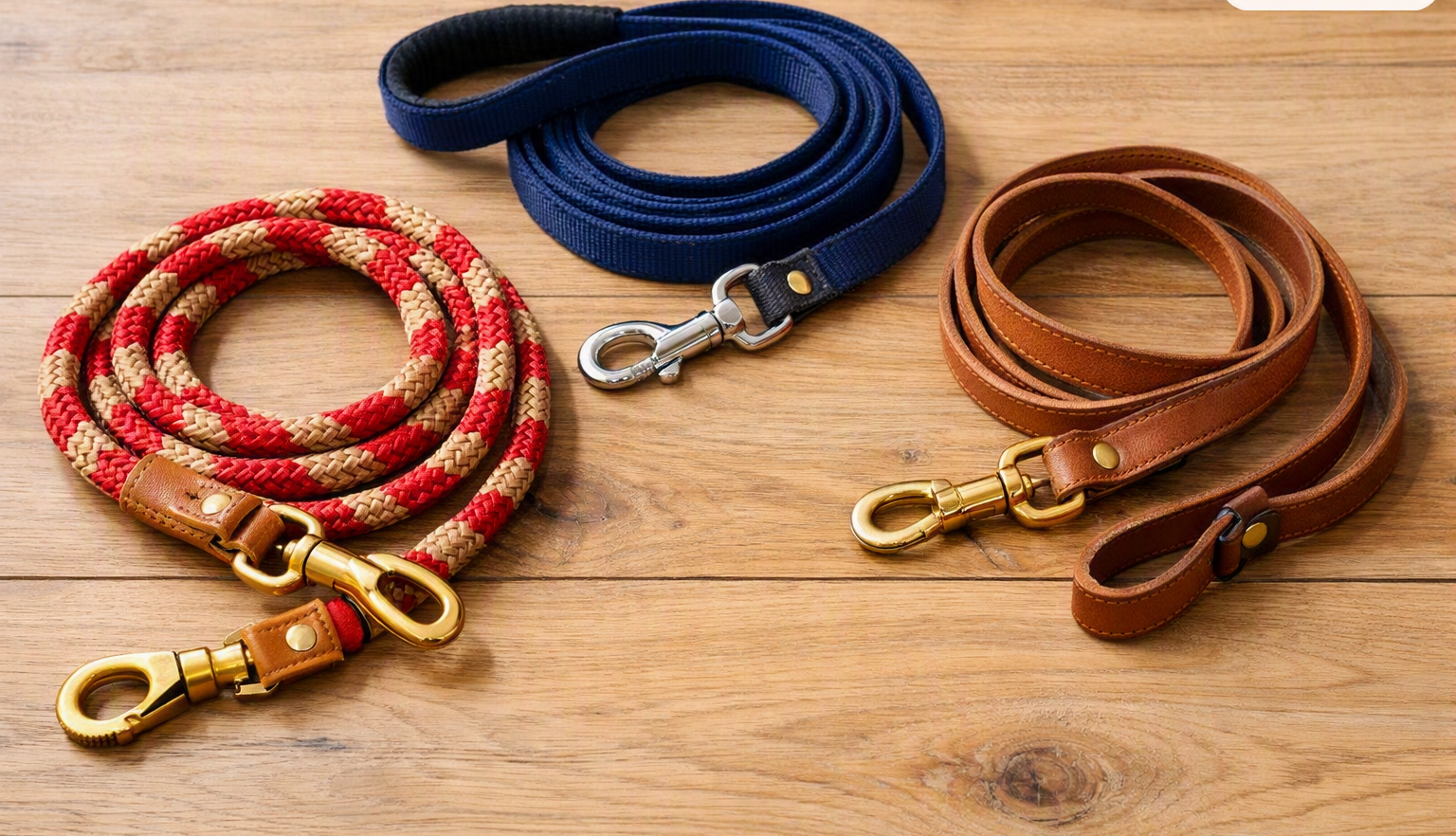
A leash is one of the most important pieces of equipment you’ll buy for your large dog. While length and hardware matter, the material can make an even bigger difference in comfort, durability, and overall performance.
Whether you’re walking a gentle Great Dane, an energetic Labrador Retriever, or a powerful American Bully, choosing the right leash material can improve control while making walks more enjoyable for both of you.
If you’re still deciding on a leash, check out my Heavy-Duty Dog Leashes for Large Dogs guide for my top product recommendations.
Why Leash Material Matters
Large dogs generate significantly more pulling force than small breeds. The wrong leash material can:
- Become uncomfortable to hold
- Wear out quickly
- Become slippery in rain
- Stretch excessively
- Fray or crack over time
- Break at the wrong time
Different materials excel in different situations, so understanding their strengths and weaknesses helps you choose wisely.
Rope Leashes
Rope leashes have become increasingly popular because they’re strong, comfortable, and designed to handle active lifestyles.
Durability
High-quality climbing-style rope is extremely strong and resists fraying better than many flat leashes.
Ideal for:
- Large breeds
- Hiking
- Daily walks
- Dogs that occasionally pull
Comfort
One of the biggest advantages is comfort. The round construction spreads pressure across your hand instead of creating sharp edges, reducing hand fatigue during long walks.
Grip
Most rope leashes provide excellent grip, even without padded handles.
Many include:
- Soft woven fibers
- Reflective stitching
- Comfortable loop handles
Weather Resistance
Rope performs well in:
- Rain
- Snow
- Mud
It dries relatively quickly and maintains strength when wet.
Cost
Typical price:
$20–45
Higher-end climbing rope models cost more but often last for years.
Best For
- Active owners
- Outdoor adventures
- Large dogs with moderate pulling
Nylon Leashes
Nylon remains the most common leash material because it’s affordable and available almost everywhere.
Durability
Quality nylon is surprisingly strong.
However:
- Chewers can destroy it quickly.
- Lower-quality nylon may fray over time.
- Constant pulling can wear stitching.
Comfort
Comfort varies widely. Thin nylon can dig into your hands if your dog pulls.
Many premium versions include:
- Padded handles
- Wider webbing
- Softer materials
Grip
– Dry conditions:
Good grip
– Wet conditions:
Can become slippery.
Weather Resistance
Nylon handles weather well.
Advantages include:
- Doesn’t rot
- Dries quickly
- Easy to clean
Cost
Typical price:
$10–30
One of the most budget-friendly options.
Best For
- Everyday neighborhood walks
- Budget-conscious owners
- Dogs with good leash manners
Leather Leashes
Leather has been trusted by trainers for decades because of its comfort and long lifespan.
Durability
A quality leather leash can last many years with proper care. Unlike nylon, leather rarely frays. Instead, it softens over time while remaining strong.
Comfort
Leather becomes incredibly comfortable after it’s broken in. Many experienced handlers prefer leather because it molds naturally to your hand.
Grip
Leather provides outstanding grip. Even in cooler weather, it generally feels more secure than nylon.
Weather Resistance
Leather is the least weather-resistant option.
Frequent exposure to:
- Rain
- Snow
- Mud
Can eventually dry out or damage the leather unless it’s regularly conditioned.
Cost
Typical price:
$35–80+
While more expensive initially, leather often lasts longer than cheaper alternatives.
Best For
- Daily walking
- Professional training
- Owners wanting long-term durability
Side By Side Comparison
| Feature | Rope | Nylon | Leather |
|---|---|---|---|
| Durability | ★★★★★ | ★★★★☆ | ★★★★★ |
| Comfort | ★★★★★ | ★★★☆☆ | ★★★★★ |
| Grip | ★★★★★ | ★★★☆☆ | ★★★★★ |
| Weather Resistance | ★★★★★ | ★★★★★ | ★★☆☆☆ |
| Cost | $$ | $ | $$$ |
Which Material Is Best?
Choose Rope If:
- You enjoy hiking or outdoor adventures.
- Your dog pulls occasionally.
- You want excellent grip.
- Comfort matters during long walks.
Choose Nylon If:
- You’re on a budget.
- Your dog walks politely.
- You need multiple leashes.
- You want plenty of color and style options.
Choose Leather If:
- You walk your dog every day.
- You value premium craftsmanship.
- You’re willing to maintain the leash.
- You want a leash that improves with age.
What About Heavy Pullers?
No leash material alone will stop pulling. If your dog frequently lunges or pulls hard, pairing a durable leash with the right harness can dramatically improve control.
A front-clip harness often provides better leverage while reducing strain on both you and your dog.
For more information, read Front-Clip vs Back-Clip Harnesses: Which Works Best?
Final Thoughts
There’s no single “best” leash material for every owner.
- Rope offers exceptional comfort, grip, and weather resistance, making it an excellent all-around choice for active large dogs.
- Nylon provides reliable performance at an affordable price and works well for everyday walks.
- Leather delivers unmatched comfort and longevity for owners willing to invest in proper care.
Whichever material you choose, prioritize strong hardware, quality construction, and a leash that’s appropriate for your dog’s size and strength.
Trusted Resources
American Kennel Club. (2024). How to Train Your Dog to Walk on a Leash.
American Veterinary Medical Association. (2024). Dog Safety Tips.
Fear Free Pets. (2023). Making Walks More Comfortable and Less Stressful for Dogs.
American Animal Hospital Association. (2021). Life Stage Guidelines for Dogs.