Large Breed Puppy Growth Stages: 6 Months to 1 Year
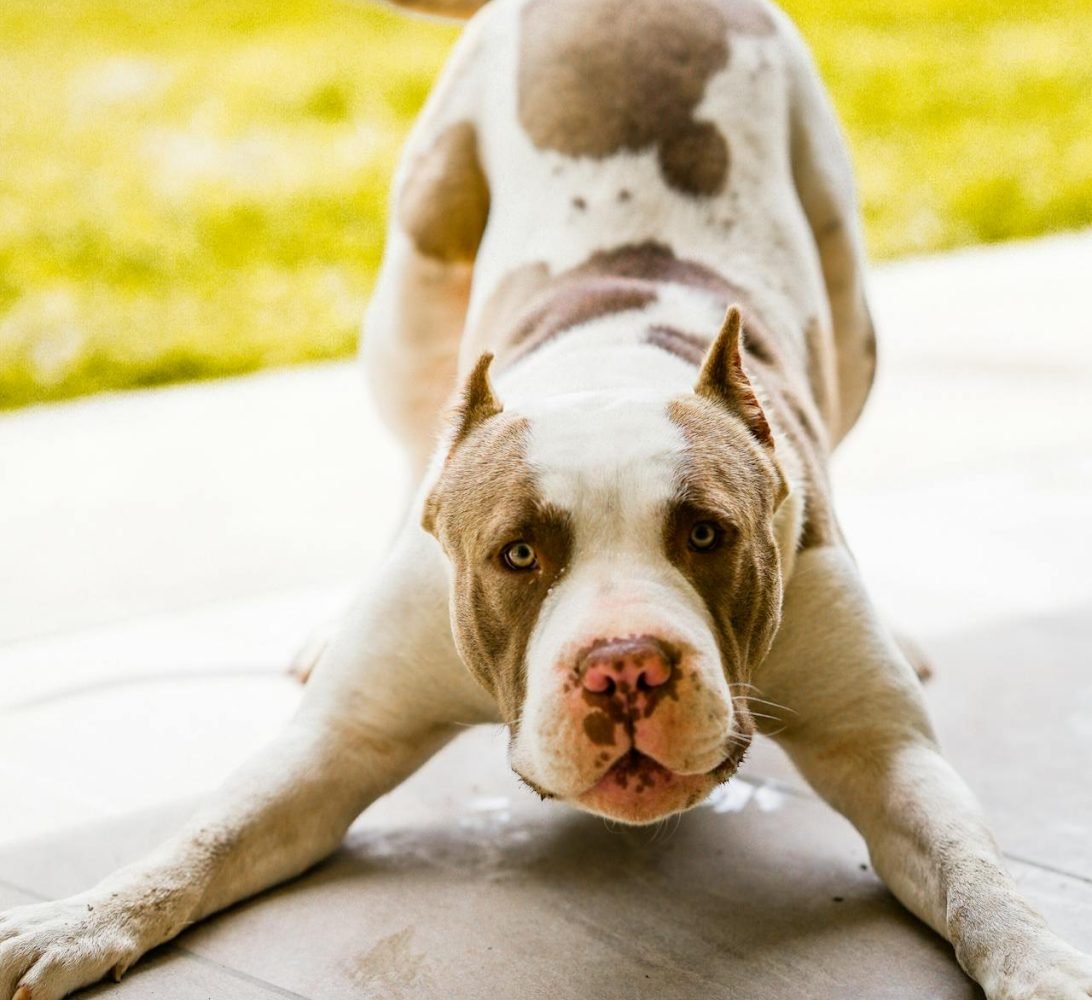
If you thought your large breed puppy was growing quickly during the first six months, just wait. Between 6 months and 1 year, your puppy may suddenly look less like a baby and more like a young adult. Their legs get longer, their body starts filling out, and their personality becomes more noticeable. At the same time, they are entering adolescence, which can bring a whole new set of behaviors to work through.
This stage can be exciting, but it can also be frustrating. A puppy who seemed to understand “sit,” “come,” or “leave it” a few weeks ago may suddenly act like they have forgotten everything. That doesn’t necessarily mean your training isn’t working.
Your puppy is still developing physically, mentally, and emotionally. Large and giant breeds also mature more slowly than smaller dogs, so reaching their first birthday does not necessarily mean they are finished growing. In fact, large and giant breed dogs may continue growing and developing well beyond their first year.
Here’s what you can generally expect from 6 months through 1 year.
Large Breed Puppy Growth Stages at a Glance
| Age | What You May Notice | Main Focus |
|---|---|---|
| 6–7 months | Adolescence begins, more independence, increased curiosity | Reinforce training and routines |
| 7–9 months | Testing boundaries, distractions, continued physical growth | Consistency, impulse control, appropriate exercise |
| 9–12 months | More adult-looking body, increasing strength and confidence | Good manners, continued training, preparing for adulthood |
Keep in mind that these are general stages, not strict deadlines. Puppies mature at different rates, and breed, genetics, size, and individual personality all play a role.
6–7 Months: Welcome to Adolescence
Around six months, many puppies begin entering adolescence.
The timing isn’t exactly the same for every dog. Some puppies begin showing adolescent behaviors earlier, while others take longer. The American Kennel Club describes 6 to 12 months as the teenage stage, when puppies may become more independent and begin testing boundaries.
You may notice your puppy:
Becoming more independent
Getting distracted more easily
Showing more interest in other dogs
Exploring farther away from you
Testing boundaries
Becoming more interested in smells and their surroundings
Ignoring commands they previously knew
Becoming more confident
Showing changes in their play style
This can be one of the most confusing parts of raising a puppy. You might think, “We already worked on this!” And you did.
Your puppy may simply need more practice as their environment, body, and brain continue to change.
Don’t Stop Training
One of the biggest mistakes you can make during adolescence is assuming your puppy has graduated from training. This is actually a great time to keep practicing.
Continue working on:
Sit
Down
Come
Leave it
Drop it
Wait
Stay
Loose-leash walking
Settling calmly
Greeting people politely
Waiting at doors
Coming when called
You don’t need long training sessions. A few minutes at a time can be enough. The goal is to make good behavior part of everyday life rather than something your dog only does during a formal training session.
And with a large breed dog, this becomes especially important because your puppy is getting stronger. A behavior that was annoying when your puppy weighed 30 pounds can become much harder to manage when that same dog weighs 70, 80, or 100 pounds.
7–9 Months: A Bigger Body and a Bigger Personality
By this age, your puppy may look dramatically different from the little dog you brought home.
Large breed puppies continue growing well beyond six months. As a general estimate, the AKC lists large dogs at about 60% of their adult size at six months and around 75% at nine months, while extra-large dogs may be even further from their final size. These are only estimates, so individual dogs can vary considerably.
You may notice:
Longer legs
A larger head or chest
More muscle developing
Increased strength
More stamina
More confidence
Increased interest in their surroundings
But don’t let their size fool you. Your puppy may look almost like an adult while still being very much a puppy.
Your Large Puppy May Not Be Done Growing
One of the easiest things to forget is that a large breed puppy can look nearly full-sized without actually being physically mature.
Large and giant breeds take longer to reach skeletal maturity. Merck Veterinary Manual notes that growth and skeletal maturity may not be complete until approximately 10–16 months in large and giant breeds, while some giant dogs may continue developing even longer.
The AKC also notes that giant breeds may continue growing until 12–18 months, and some very large dogs can take even longer to reach their full size.
So don’t assume that your one-year-old giant breed is completely finished growing.
Exercise: More Doesn’t Always Mean Better
As your puppy gets bigger and stronger, you may feel like they should be able to handle more exercise, but their developing bones and joints still need consideration.
Large and giant breed puppies are particularly vulnerable to problems caused by excessive or high-impact activity while their growth plates are still developing. Activities such as sustained running, repetitive jumping, and strenuous exercise can place additional stress on growing bones and joints.
That doesn’t mean your puppy should spend the day lying around. They still need regular activity, play, exploration, and mental stimulation. Instead of focusing on exhausting your puppy, think about age-appropriate movement.
Good options can include:
Regular walks appropriate for your puppy
Free play
Sniffing and exploring
Short training sessions
Interactive games
Gentle play with appropriate dogs
Food puzzles and other mental activities
Allow your puppy to move naturally rather than pushing them to keep up with an adult exercise routine.
If you’re considering running, long-distance hiking, competitive agility, or other strenuous activities, talk with your veterinarian about when your individual dog is physically ready.
Nutrition Still Matters
Just because your puppy is getting older doesn’t mean nutrition stops being important. Large breed puppies need controlled growth rather than simply growing as quickly as possible.
A complete and balanced diet formulated for large-breed growth can help provide appropriate nutrition while your puppy’s bones and body continue developing. Merck Veterinary Manual recommends continuing an appropriate growth diet until skeletal maturity rather than automatically switching to adult food simply because obvious growth has slowed.
Overfeeding is also something to avoid. A heavier puppy isn’t necessarily a healthier puppy. Excessive weight and overly rapid growth can place additional stress on developing bones and joints.
Your veterinarian can help you monitor your puppy’s:
Weight
Body condition
Growth rate
Diet
Treat intake
Overall development
If you’re unsure whether it’s time to change foods or adjust portions, your veterinarian is a good person to ask rather than making a major change based only on your puppy’s age.
9–12 Months: Your Puppy Starts Looking Like a Young Adult
By nine to twelve months, you may look at your puppy and wonder where the little eight-week-old puppy went. Your puppy may be much taller, heavier, stronger, and more confident. But mentally and emotionally, they may still have plenty of growing to do.
This is especially true for large and giant breeds, which generally mature more slowly than smaller dogs.
You may notice that your puppy:
Has more stamina
Is stronger on the leash
Has a more defined personality
Is more confident in familiar environments
Can handle longer periods of activity
Still gets distracted
Still wants to play
Still occasionally makes questionable decisions
In other words, you may have a dog who looks grown but still behaves like a teenager.
Keep Working on Leash Manners
Taken from experience, this is an especially important stage for large breed dogs. Your puppy is getting stronger every month. If pulling is becoming a habit, it’s much easier to address it now than after your puppy reaches full adult strength.
Continue rewarding loose-leash walking and practice in different environments.
You can also work on:
Walking past distractions
Checking in with you
Stopping when you stop
Waiting before crossing streets
Walking calmly past other dogs
Not pulling toward people
Not dragging you toward interesting smells
Your goal isn’t necessarily to make every walk perfectly structured. Your dog should still have opportunities to sniff and explore. The goal is to teach your growing dog that they can enjoy their surroundings without dragging you around to get there.
Impulse Control Becomes Even More Important
A large puppy doesn’t have to be perfectly obedient by one year old, but this is a good time to continue strengthening impulse control.
Practice simple everyday situations such as:
Wait for the food bowl.
Your puppy waits until you give permission to eat.
Wait at the door.
Your puppy doesn’t rush through the doorway.
Leave it.
Your puppy learns that not everything interesting belongs in their mouth.
Drop it.
Your puppy releases something they already picked up.
Settle.
Your puppy learns how to relax instead of constantly looking for something to do.
These skills become increasingly valuable as your puppy becomes larger and stronger.
Don’t Be Surprised by Setbacks
One of the most frustrating parts of adolescence is when a puppy seems to go backward. Maybe your puppy used to come running when called. Now they suddenly find the backyard much more interesting.
Maybe they used to walk nicely. Now every smell seems to require an investigation.
Maybe they were great at settling in the house. Now they have discovered that there are approximately 400 things worth doing instead.
Try not to think of this as your training failing. Instead, go back to the basics.
- Reduce distractions.
- Use rewards.
- Practice for short periods.
Then gradually increase the difficulty again. Adolescence is a time to reinforce what your puppy already knows while continuing to teach new skills.
Continue Socialization
Your puppy’s main socialization period may be behind them, but that doesn’t mean social experiences should stop. Continue giving your dog appropriate opportunities to experience different environments, people, surfaces, sounds, and situations.
Keep these experiences positive and don’t force your puppy into situations that clearly frighten or overwhelm them.
If you want a more detailed guide, see:
How to Socialize a Large Breed Puppy: A Complete Guide
The goal at this age is to continue building a dog who can navigate everyday life with confidence and appropriate behavior.
What Should Your Large Breed Puppy Know by 1 Year?
Every dog develops at a different pace, so don’t use a first birthday as a deadline for perfect obedience.
By around one year, however, it’s helpful if your dog has a foundation in:
Responding to their name
Basic obedience
Coming when called in appropriate situations
Loose-leash walking
Leave it and drop it
Waiting at doors
Basic impulse control
Appropriate greetings
Basic handling
Settling in the home
Riding safely in the car
Being comfortable with normal household routines
Continuing to respond appropriately to new situations
Your dog doesn’t have to perform these skills perfectly every time.
Consistency matters more than perfection.
Your One-Year-Old Large Breed Dog Is Still Young
It’s easy to look at a one-year-old large breed dog and think, “They’re basically grown now.”
Physically, they may look close to adult size. Developmentally, however, they may still have a lot of growing and maturing ahead.
Large and giant breeds can continue developing beyond their first birthday, and some may not reach full physical maturity until well after one year. This is also why it’s important not to rush your puppy into an adult exercise routine simply because they look like an adult dog.
Your dog may be big enough to look like they belong in the adult-dog category while their bones and joints are still developing.
And mentally, you may still have a teenager on your hands.
What Comes After the First Year?
The first year lays an important foundation, but your dog’s development doesn’t suddenly stop at 12 months. The next stage is about continuing to build on what you’ve already taught.
Your dog may continue gaining muscle and filling out. Their confidence may continue developing. Their training will need reinforcement. And depending on their breed and individual development, adolescence may continue for some time.
For giant breeds in particular, emotional maturity can take considerably longer than the first year.
So don’t feel like you have to have everything figured out by your dog’s first birthday. You don’t need a perfect one-year-old dog.
Final Thoughts
The 6-month-to-1-year stage can be one of the most interesting parts of raising a large breed dog. Your puppy is becoming stronger, more independent, and more confident, but they’re still learning how to navigate the world.
Some days you’ll see the adult dog they’re becoming. Other days, they’ll remind you that they’re still very much a puppy.
Keep training and providing appropriate exercise and mental stimulation. Keep their nutrition on track. And most importantly, keep your expectations realistic. Large dogs take time to grow into themselves.
The work you put in during this stage can help build the foundation for the strong, well-mannered companion you’re hoping to have for years to come.
Trusted Resources
American Kennel Club. (2026). When do dogs stop growing? When are puppies fully grown?
American Kennel Club — Puppy Growth ChartAmerican Kennel Club. (2026). A puppy growth timeline: Transitions in puppyhood.
American Kennel Club — Puppy Growth TimelineAmerican Kennel Club. (2026). Panosteitis and growth-based health concerns for puppies.
American Kennel Club — Growth-Based Health ConcernsMerck Veterinary Manual. (n.d.). Feeding practices in small animals.
Merck Veterinary Manual — Feeding Practices in Small AnimalsVCA Animal Hospitals. (n.d.). How exercise can damage puppy growth plates.
VCA Animal Hospitals — Puppy Exercise and Growth Plates