Large Breed Puppy Growth Stages: 8 Weeks to 6 Months
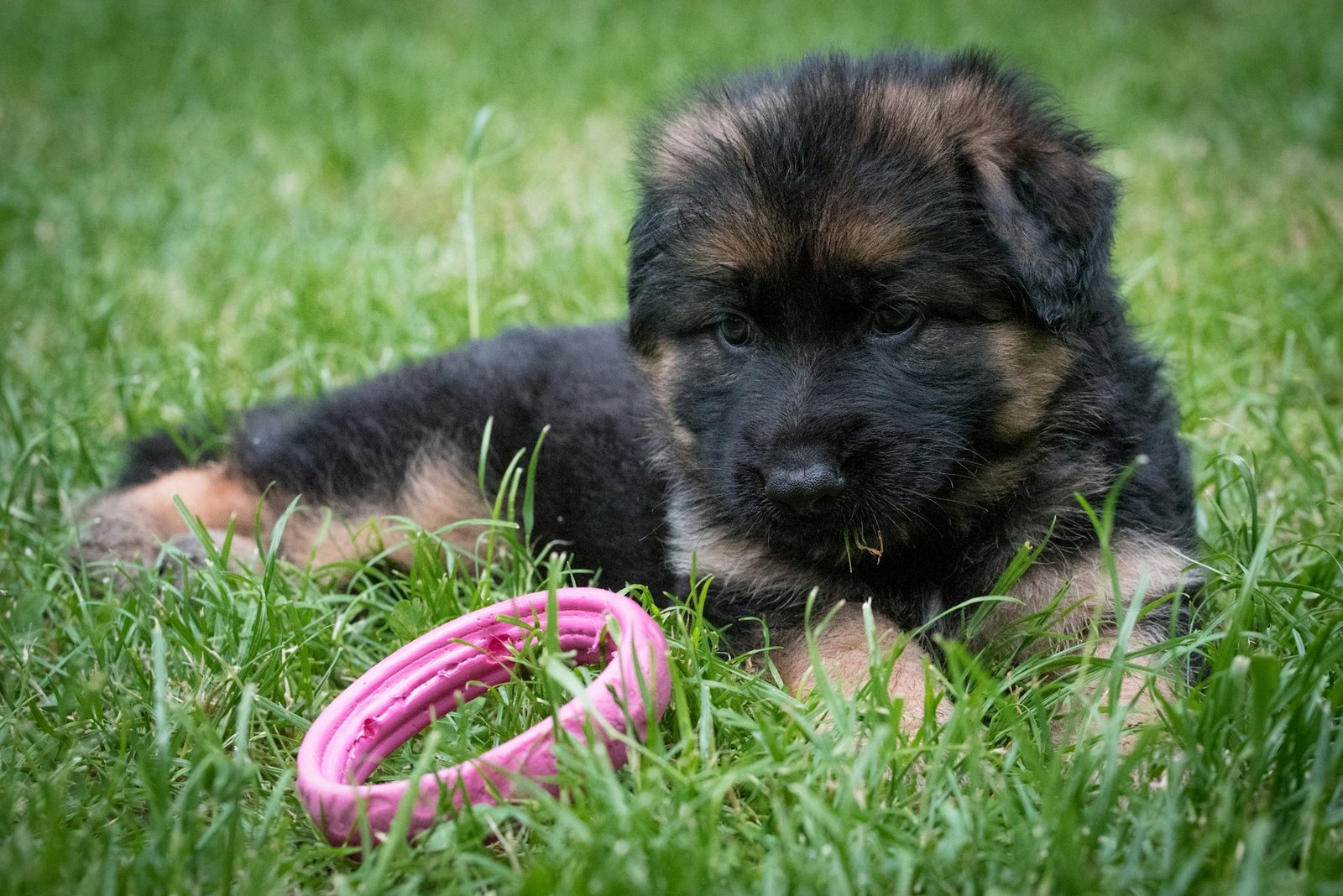
Bringing home a large breed puppy is exciting, but those first six months can also feel like a lot to keep up with.
Your puppy is learning how to live in your home, where to go potty, how to interact with people and other dogs, and what they are allowed to chew. At the same time, their body is growing quickly and their personality is starting to develop.
And with a large breed puppy, that growth can seem especially dramatic. One week you may be carrying your puppy around, and a few months later, you’re wondering how those little paws got so big.
The first six months are an important foundation for the years ahead. Your puppy doesn’t need to be perfectly trained, but they do need consistent guidance, positive experiences, and plenty of opportunities to learn.
Here’s what you can generally expect from 8 weeks through 6 months.
Large Breed Puppy Growth Stages at a Glance
Every puppy develops at their own pace. Breed, genetics, nutrition, environment, and individual temperament can all affect how quickly your puppy grows and develops.
Think of these stages as general guidelines rather than exact deadlines.
| Age | What You May Notice | Main Focus |
|---|---|---|
| 8 weeks–3 months | Settling in, potty training, early socialization | Building trust and routines |
| 4–5 months | Teething, chewing, growing confidence | Training and safe exploration |
| 5–6 months | More independence, increasing strength, preparing for adolescence | Consistency and impulse control |
The goal isn’t to rush your puppy through these stages. It’s to give them the skills and experiences they need as they grow.
Settling In, Potty Training, and Socialization
Bringing home an 8-week-old puppy is the beginning of a major transition.
Your puppy has left their mother and littermates and is suddenly experiencing a completely different environment. New people, sounds, smells, routines, and surroundings can be exciting but also overwhelming.
This stage is about helping your puppy feel safe.
Give Your Puppy Time to Settle In
Your puppy may be playful one minute and completely worn out the next. They may follow you everywhere or spend much of the day sleeping. You do not have to entertain your puppy constantly.
Establish a simple routine that includes:
Regular meals
Frequent potty breaks
Plenty of naps and quiet time
Short training sessions
Supervised play
A comfortable place to sleep
Safe opportunities to explore
Puppies need plenty of sleep while they are growing. Rest is just as important as play and training.
A predictable routine can also help your puppy understand what to expect throughout the day.
Potty Training: Building a Consistent Routine
Potty training should begin as soon as your puppy comes home. At this age, your puppy is still developing bladder control and learning where they should go.
Take your puppy outside first thing in the morning, after meals and naps, after playtime, and before bed. Watch for signs such as sniffing, circling, or suddenly wandering away. When your puppy finishes eliminating outside, praise them immediately so they begin connecting the behavior with a positive experience.
What if your puppy has an accident?
Accidents are a normal part of learning. If you discover one after it happens, clean the area thoroughly and continue your routine. If you catch your puppy in the act, calmly interrupt them and take them outside.
Avoid rubbing your puppy’s nose in urine or feces. Although some owners have used this method and still successfully house-trained their puppies, it doesn’t reliably teach them where to eliminate and may cause them to become fearful of eliminating in front of their owner.
The goal is to teach your puppy that going outside is the right choice.
Start Socialization Early
Socialization is an important part of your puppy’s first few months. The early weeks are particularly important for helping puppies learn how to respond to new experiences, people, environments, and sounds.
For now, focus on giving your puppy safe, positive exposure to everyday experiences, such as:
Different people
Household sounds
New surfaces
Car rides
Grooming and handling
Calm, appropriate dogs
New environments
Keep experiences gradual and positive, and don’t force your puppy into situations that clearly make them uncomfortable.
Socialization Doesn’t Mean Your Puppy Can’t Be Protective
If you chose a large breed partly because you appreciate their natural protective instincts, socialization doesn’t mean teaching your puppy to welcome every stranger.
Instead, you’re helping your puppy become comfortable with normal everyday situations and learn appropriate responses.
For a more detailed look at socialization, see How to Socialize A Large Breed Puppy.
Start Basic Training
Your puppy is capable of learning from the moment they come home. Keep training sessions short and positive. At this age, even a few minutes can be productive.
Start with simple skills such as:
Learning their name
Coming when called
Sitting
Getting comfortable with a collar and leash
Gentle handling
Going to their bed or designated resting area
Beginning to learn “leave it” and “drop it”
Don’t worry about how many commands your puppy knows. This is the beginning of bonding and communicating with your puppy.
4–5 Months: Teething, Chewing, and Growing Confidence
By four or five months, your puppy may seem like a completely different dog from the little puppy you brought home. They’re becoming more curious, more active, and more confident.
This is also when teething can become a major part of everyday life.
Get Ready for Teething
As your puppy’s baby teeth are replaced by permanent teeth, their desire to chew may increase. Your puppy will start to chew on everything; shoes, furniture, blankets, toys, and anything else within reach can become fair game.
Provide appropriate puppy chew toys and redirect your puppy when they choose something they shouldn’t chew. It’s also a good idea to puppy-proof your home by keeping dangerous objects out of reach.
Check chew toys regularly and throw away any toy that becomes damaged or small enough to create a swallowing hazard.
If you’re unsure whether a particular chew is appropriate, always ask your veterinarian. For more information about puppy teething, read my article, Understanding Puppy Teething & Safe Chewing for Large Breed Puppies.
Your Puppy Will Become More Confident
At this age, your puppy will be more willing to investigate the world around them. They may explore farther from you, show more interest in unfamiliar objects, and become more enthusiastic about their surroundings.
However, confidence doesn’t mean your puppy will suddenly be fearless. A puppy who confidently investigates one new object may be nervous about something else entirely. Let your puppy approach unfamiliar things at their own pace.
Continue Basic Obedience
This is a good time to build on the training you started during the first few months.
You can begin practicing:
Sit
Down
Come
Leave it
Drop it
Loose-leash walking
Waiting before going through doors
Settling on a bed or mat
Your puppy may be able to focus for longer periods, but distractions can still make training difficult. A puppy who responds perfectly to “come” in your living room may suddenly forget everything when they see a squirrel outside, which is normal.
Gradually practice familiar behaviors in different environments and around manageable distractions.
5–6 Months: More Independence and Preparing for Adolescence
Around five to six months, you may notice another shift in your puppy. They’re becoming stronger, more curious, and increasingly independent. They will also become more interested in the world around.
This is a good time to strengthen the foundation you’ve already built.
Don’t Confuse Independence With Disobedience
Your puppy may start making more decisions for themselves, like teenagers.
Maybe they don’t come running quite as quickly when you call. Maybe an interesting smell is more exciting than sitting for a treat. You may even find yourself thinking, Didn’t I already teach this?
This doesn’t necessarily mean your puppy is becoming a bad puppy. They’re growing and becoming more aware of their surroundings. Continue practicing the behaviors you want. Reward your puppy for checking in with you, responding to their name, coming when called, and choosing appropriate behaviors.
Start Preparing for Adolescence
This is where the timeline can get a little confusing because there isn’t one exact age when every puppy becomes an adolescent.
Some veterinary sources describe adolescence as beginning around 6 months, while the timing can vary depending on the individual dog and breed. For many puppies, the transition begins around this period, which is why it’s helpful to start preparing before you see obvious adolescent behavior.
For a large breed puppy, 5–6 months is a good time to start thinking ahead about adolescence, even if your puppy still seems very much like a baby.
Early changes can include:
Becoming more independent
Showing more interest in other dogs
Testing boundaries
Becoming more easily distracted
Suddenly seeming to “forget” something they’ve already learned
Not every puppy will show all of these behaviors, and they won’t necessarily appear at exactly six months. The important thing to remember is to keep training consistent.
Your puppy is also becoming stronger, which makes good manners increasingly important. A puppy who jumps on people at 20 pounds may be cute to some people, but a much larger dog doing the same thing can easily knock someone over.
Keep Working on Leash Skills
Your puppy is getting stronger, so this is a good time to continue reinforcing loose-leash walking. Reward your puppy for walking near you and checking in with you. Give them opportunities to sniff and explore safely rather than expecting every walk to be a formal training session, but don’t ignore pulling simply because your puppy is young.
A behavior that is manageable when your puppy is small can become much harder to handle as their size and strength increase.
Pay Attention to Exercise
Large breed puppies need exercise, but more exercise isn’t always better. Their bones and joints are still developing, so avoid turning a young puppy into a running partner or pushing repetitive, high-impact activity.
Instead, focus on age-appropriate movement, play, exploration, and mental stimulation. Short walks, supervised play, sniffing opportunities, and brief training sessions can all provide useful activity without expecting your puppy to have the physical development of an adult dog.
If you’re unsure what type or amount of exercise is appropriate for your puppy, talk with your veterinarian.
Supporting Healthy Growth During the First Six Months
Large breed puppies have different nutritional and developmental needs from adult dogs. One of the most important things you can do is provide a complete and balanced diet formulated for large breed puppy growth. Avoid trying to make your puppy grow as quickly as possible.
Bigger isn’t always healthier.
Controlled growth and maintaining an appropriate body condition are important considerations for large breed puppies. Your veterinarian can help you determine whether your puppy’s weight and growth are appropriate for their breed and individual development.
Regular veterinary visits also give you an opportunity to discuss:
Weight and body condition
Nutrition
Vaccinations
Parasite prevention
Exercise
Teething
Development
Any unusual changes in behavior or movement
Don’t hesitate to ask questions. Your puppy is changing quickly, and what is appropriate at three months may not be appropriate at six months.
What's Next?
At six months, your large breed puppy is entering another important stage. They may look much bigger than the puppy you brought home, but they are still very much a young dog.
The next six months can bring increased independence, adolescence, boundary testing, and a body that continues to grow. That’s why the habits you establish during these first six months are so valuable. You don’t need a perfect puppy. You need a puppy who is learning.
Give them structure. Be consistent. Keep socialization positive. Continue training. Provide appropriate nutrition and exercise. And remember that every puppy develops at their own pace.
The little puppy you brought home at eight weeks won’t stay little for long. Enjoy these early months while you can.
Final Thoughts
The 6-month-to-1-year stage can be one of the most interesting parts of raising a large breed dog.
Your puppy is becoming stronger, more independent, and more confident, but they’re still learning how to navigate the world. Some days you’ll see the adult dog they’re becoming. Other days, they’ll remind you that they’re still very much a puppy.
Keep providing appropriate exercise, nutrition, and mental stimulation. Large dogs take time to grow into themselves.
The work you put in during this stage can help build the foundation for the strong, well-mannered companion you’re hoping to have for years to come.
Trusted Resources
American Kennel Club. (n.d.). A puppy growth timeline: Transitions in puppyhood. American Kennel Club.
American Kennel Club. (n.d.). How to potty train a puppy: A step-by-step guide for new owners. American Kennel Club.
American Society for the Prevention of Cruelty to Animals. (2014, September 25). House training your dog or puppy. ASPCA.
Cornell University College of Veterinary Medicine. (n.d.). How long should puppies stay with their mother? Cornell University College of Veterinary Medicine.
Cornell University College of Veterinary Medicine. (n.d.). The teenage years: Puppy-proofing and training tips. Cornell University College of Veterinary Medicine.
Merck Veterinary Manual. (n.d.). Feeding practices in small animals. Merck Veterinary Manual.
VCA Animal Hospitals. (n.d.). Feeding growing puppies. VCA Animal Hospitals.