Spotlight: Great Dane
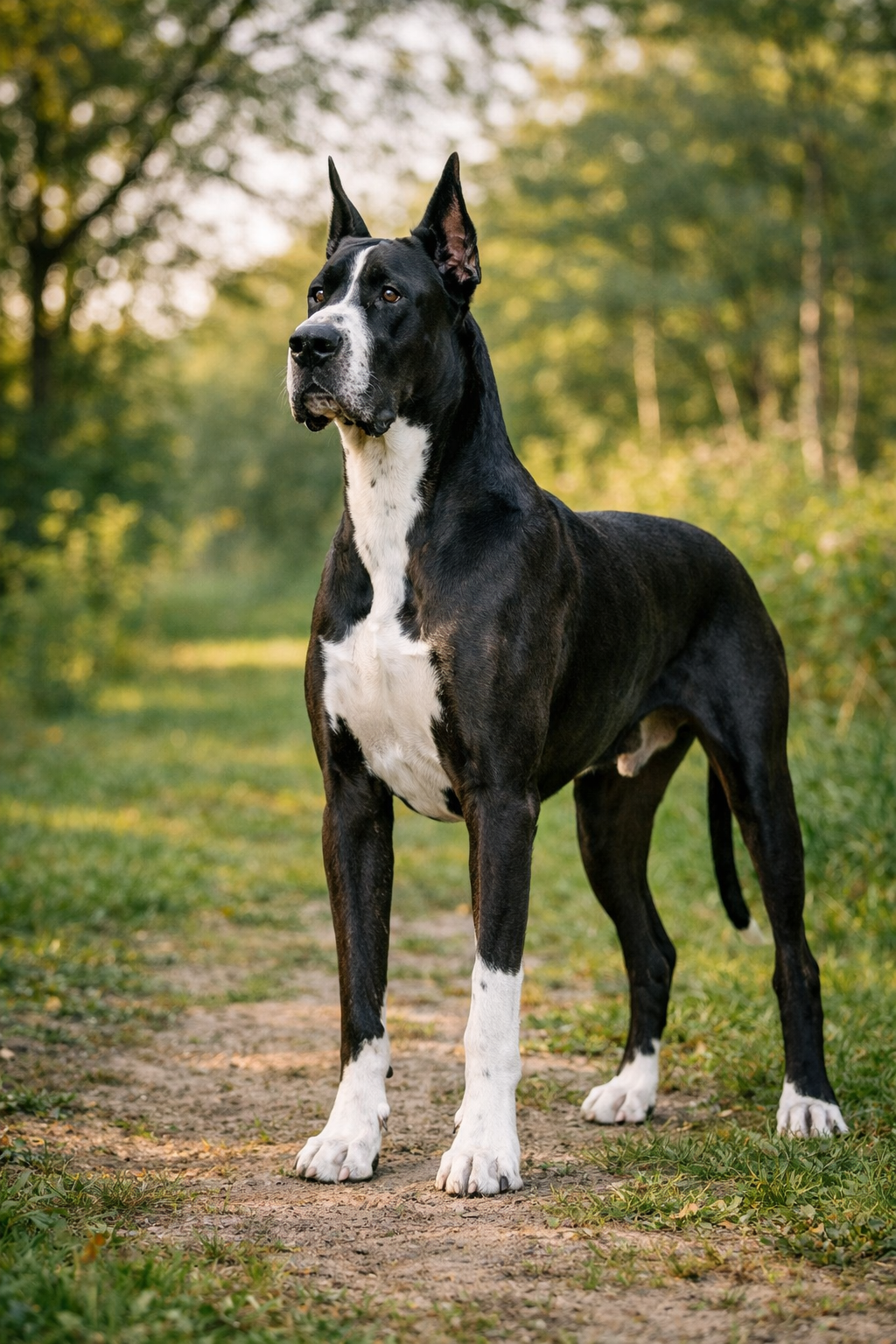
Few breeds command attention quite like the Great Dane, the gentle giant of the dog world. With their towering height, elegant appearance, and calm demeanor, these dogs are often referred to as the “Apollo of Dogs.” Despite their impressive size, Great Danes are known for being affectionate, loyal companions who thrive on close relationships with their families.
If you’ve ever met a Great Dane, you’ve probably noticed that their personality is often much bigger than their body. These gentle giants are loving, sensitive, and surprisingly content to spend much of their day lounging beside their favorite people.
Whether you’re considering adding a Great Dane to your family or simply love learning about big breeds, this spotlight breaks down everything that makes these giants so special.
Breed Overview
One of the tallest dog breeds in the world, originating in Germany about 400 years ago, the Great Dane was originally bred for hunting wild boars and deer. They also served as estate guards.
Height: 28–32 inches or taller
Weight: 110–175+ pounds
Lifespan: 7–10 years
Energy Level: Moderate
Although their size can be intimidating, Great Danes are generally friendly and welcoming when properly socialized. Many owners describe them as oversized lap dogs who don’t seem to realize how large they actually are.
Temperament and Personality
One of the biggest reasons people fall in love with Great Danes is their temperament. They are known for being calm, affectionate, and eager to be close to their families.
Great Danes often form strong bonds with their owners and may follow them from room to room throughout the day.
They are typically:
Affectionate and loving
Patient with children
Friendly with family and guests
Confident without being aggressive
Sensitive to harsh corrections
Loyal and devoted companions
Early socialization is important to help Great Danes develop into confident, well-mannered adults. Given their size, teaching polite behavior from a young age is essential.
Living With a Great Dane
Space Requirements
Despite their giant size, Great Danes do not necessarily need a huge home. They are relatively low-energy indoors and are often content to relax on a comfortable bed or couch.
However, they do need enough room to move around safely. Their long legs and powerful tails can easily knock over furniture, lamps, or anything left within reach.
Exercise Needs
Great Danes require moderate daily exercise to stay healthy and maintain muscle tone.
A typical routine may include:
Two daily walks
Light play sessions
Mental enrichment activities
Basic training exercises
For puppies, it’s important to avoid excessive running or jumping. Their bones and joints develop slowly, and high-impact activities can increase the risk of orthopedic problems in the future.
Training
Training should begin as early as possible. A fully grown Great Dane can outweigh many adults, making good manners a necessity rather than an option.
Focus on:
Loose-leash walking
Basic obedience commands
Socialization with people and other dogs
Crate training
Impulse control exercises
Positive reinforcement methods typically work best with this sensitive breed.
Feeding and Nutrition
Nutrition plays a major role in the health of giant breeds like the Great Dane. Their rapid growth during puppyhood requires careful management to support healthy bone and joint development.
Many veterinarians recommend feeding a high-quality large-breed or giant-breed formula designed specifically for controlled growth.
Important feeding considerations include:
Feed large-breed puppy food during growth stages
Divide meals into two or more portions daily
Maintain a lean body condition
Avoid overfeeding
Discuss nutritional needs with your veterinarian
Because Great Danes are prone to bloat, many owners establish consistent feeding schedules and avoid vigorous exercise immediately before and after meals.
Common Health Issues
Like many giant breeds, Great Danes are predisposed to several health concerns.
Bloat (Gastric Dilatation-Volvulus)
Bloat is one of the most serious conditions affecting Great Danes and can become life-threatening within hours.
Warning signs include:
A swollen abdomen
Restlessness
Excessive drooling
Unsuccessful attempts to vomit
Signs of distress
Many owners discuss preventive gastropexy surgery with their veterinarian, especially if their dog is already undergoing a spay or neuter procedure.
Hip Dysplasia
Hip dysplasia occurs when the hip joint develops abnormally, leading to pain, arthritis, and mobility issues over time.
Maintaining a healthy weight and providing appropriate exercise may help reduce stress on the joints.
Dilated Cardiomyopathy (DCM)
Great Danes are at increased risk for dilated cardiomyopathy, a heart disease that affects the heart’s ability to pump blood effectively.
Regular veterinary examinations can help detect problems early.
Osteosarcoma
Osteosarcoma, an aggressive bone cancer, occurs more frequently in large and giant breed dogs than in smaller breeds.
Early diagnosis and treatment are critical for the best outcomes.
Hypothyroidism
Hypothyroidism can lead to:
Weight gain
Lethargy
Skin problems
Coat changes
Most cases can be successfully managed with medication and regular veterinary monitoring.
Grooming and Care
One advantage of owning a Great Dane is their relatively low-maintenance coat.
Basic grooming includes:
Weekly brushing
Regular nail trims
Ear cleaning as needed
Routine dental care
Occasional baths
Although their short coat is easy to maintain, owners should not underestimate the challenge of bathing a dog that may weigh more than 150 pounds.
Is A Great Dane Right For You?
Great Danes can make wonderful companions for the right family. They are affectionate, loyal, and surprisingly gentle considering their enormous size.
A Great Dane may be a good fit if you are looking for:
A calm and loving companion
A family-friendly breed
A dog that enjoys spending time indoors
A loyal dog that bonds closely with its people
However, prospective owners should also consider:
Their relatively short lifespan
Higher food costs
Larger veterinary expenses
Space requirements
The importance of early training and socialization
While they may take up most of the couch, Great Danes often fill an even larger space in their owners’ hearts. Their combination of size, gentleness, and devotion has made them one of the most beloved giant breeds in the world.
Final Thoughs
The Great Dane is proof that a giant dog can also be a gentle one. Beneath their towering frame is a loving companion that wants nothing more than to be close to their family.
For owners who can accommodate their size and provide proper training, nutrition, and veterinary care, the Great Dane offers years of loyalty, affection, and unforgettable memories.
Trusted Resources
American Kennel Club. (2025). Great Dane Dog Breed Information. Retrieved from https://www.akc.org/dog-breeds/great-dane/
American College of Veterinary Surgeons. (2025). Bloat (Gastric Dilatation-Volvulus). Retrieved from https://www.acvs.org
Freeman, L. M. (2019). Nutrition in large and giant breed dogs. Journal of the American Veterinary Medical Association, 254(10), 1125–1130.
O’Neill, D. G., Church, D. B., McGreevy, P. D., Thomson, P. C., & Brodbelt, D. C. (2017). Longevity and mortality of Great Danes under primary veterinary care in the United Kingdom. Canine Genetics and Epidemiology, 4(1), 1–10.